May is Chip Your Pet Month! Reasons to Microchip Your Pet
It may be a painful and even devastating experience to lose your pet. Responsible pet caregivers use collars and ID tags to safeguard their pets. Collars and ID tags are not infallible, and dogs and cats can still become separated. Collars can break or come off, placing your pet among the thousands of unidentifiable stray animals at animal shelters.
Some dogs are taken by opportunistic or well-planned criminals who target popular breeds. In rare situations, someone may mistakenly believe your dog belongs to them, resulting in a dispute over ownership. It may be traumatic for both of you if you are separated from your pet.
Microchips are an excellent backup option for pet identification, but they should never be used as the primary method. A special scanner must read a microchip, which an animal control officer or shelter will have, but your next-door neighbor will not. And if Fido gets loose, it’ll most likely be a private individual who comes upon them first. Identification tags are your pet’s first ticket home in the event of an accident separation.
What are microchips, exactly?
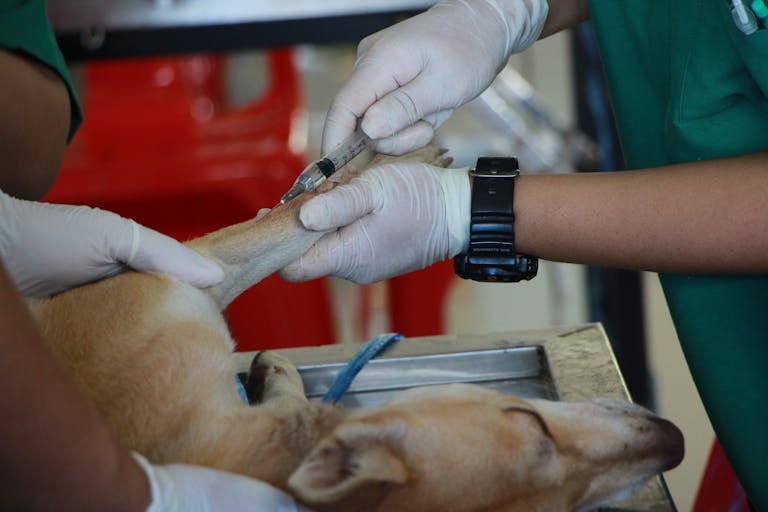
Microchips are tiny computer chips implanted into your pet and store a unique identifying number that can help you find your missing pet. They’re about the size of a grain of rice and are injected under your pet’s skin using a needle and syringe, just like a regular vaccination. They never break or fall off, unlike collars and ID tags. They function by receiving a radio signal from a scanner and sending back the encoded chip identification number. The critical contact information is a phone call away once you have the chip identification number.
How is my dog’s microchip implanted?
The sterile microchip is scanned in the packaging before insertion to ensure that the transponder’s identifying code matches the package bar code label.
The conventional microchip implantation location for dogs is between the dog’s shoulder blades in the subcutaneous tissue along the dorsal midline (the spine). Your dog should be standing or resting on its stomach for proper positioning. The needle is quickly inserted after some of the loose skin between the shoulder blades is gently pushed up. When the applicator trigger is pressed, the microchip is injected into the tissue.
After insertion, the dog is scanned to check if the chip is reading correctly.
Why Microchip Your Pet?
They can assist you in reuniting with your lost pet.
The fundamental goal of microchipping is to achieve this. If your pet becomes missing and is taken to the veterinarian or pound, it can be scanned. The scan will allow them to contact you and inform you that your pet has been found securely.
However, it’s vital to note that a microchip is not the same as a GPS transmitter. It won’t assist you in finding your missing pet; instead, it will allow a veterinarian or animal control officer to notify you after your pet has been discovered.
Easily update your information.
If you solely use collars and ID tags on those collars, you’ll have to buy many new items throughout your pet’s life. If your pet is microchipped, all you have to do is make sure your contact information is up to date in the registries. There’s no need to invest in new physical equipment to ensure your pet’s identification.
They are long-lasting.
Because microchips may survive up to 25 years, you should only need to implant one in your pet’s lifetime. Some pets live longer than 25 years, but such creatures aren’t fit to run away.
The operation of microchipping is painless.
Many owners are concerned that implanting a microchip into their dog’s body may cause pain. In reality, the treatment takes only seconds and requires no anesthesia. Your dog will not feel anything because the chip is implanted between the shoulder blades.
Finally, it’s critical to take precautions to safeguard your pet and guarantee that it can be securely returned home if they become separated from you. A microchip is a simple, painless, and effective way to ensure that your pet is identifiable in the event that they wander away from home. Talk to your veterinarian about your options right now.